
Essential Steps for Effective Swimming Pool Rendering and Crack Prevention
Updated: May 13
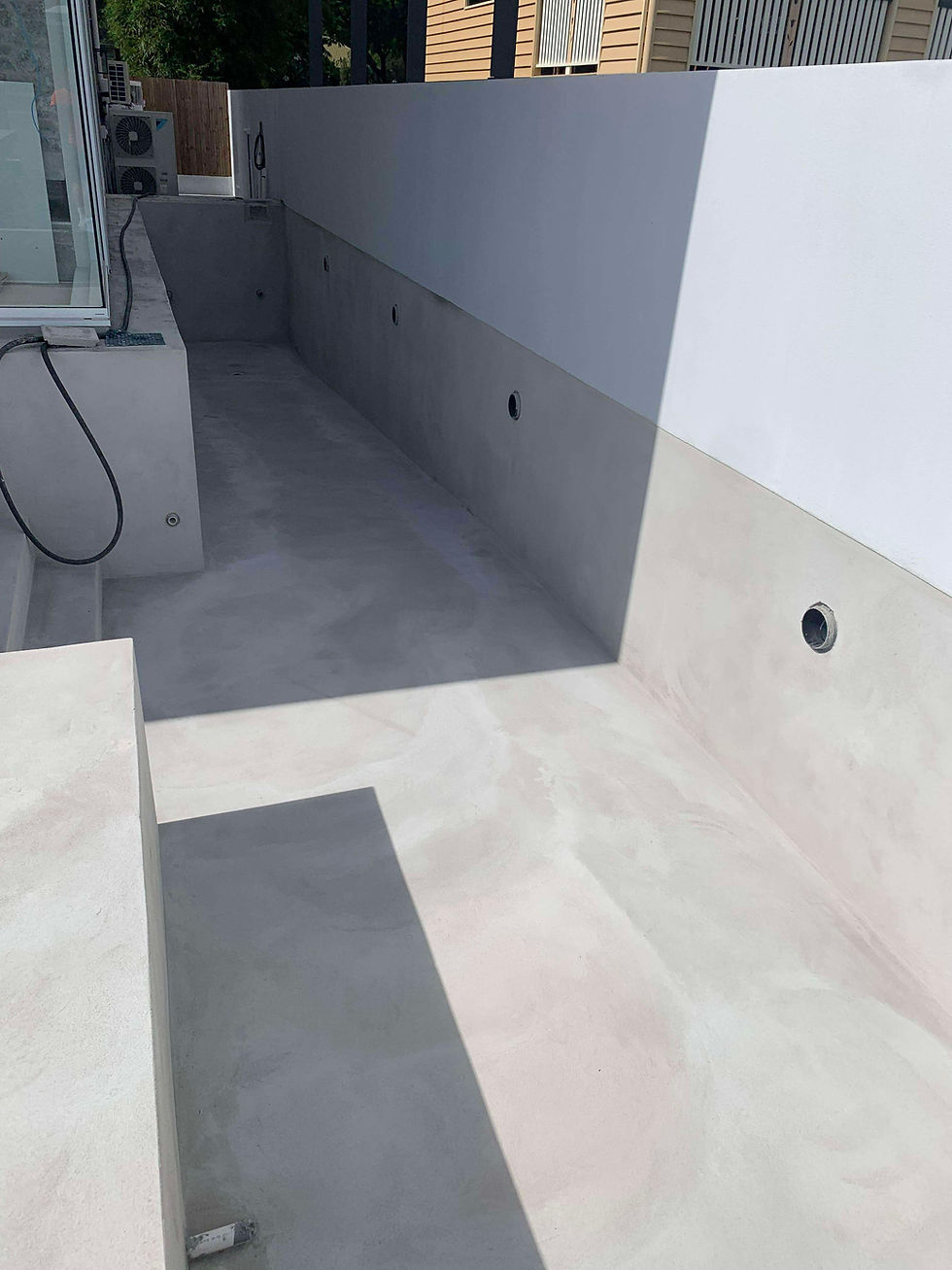
Swimming pool rendering is a critical phase in pool construction that affects both the durability and appearance of the pool. Proper rendering ensures a smooth, waterproof surface that protects the concrete shell and prepares the pool for tiling or other finishes. However, cracks often develop during the curing process or due to structural stress, which can lead to leaks and costly repairs. This post outlines essential steps for successful swimming pool rendering, how to manage the concrete shell cure, prepare the surface before tiling, and prevent or repair cracks using epoxy sealing.

Understanding Swimming Pool Rendering
Swimming pool rendering involves applying a layer of cement-based material over the concrete shell to create a smooth surface. This layer provides a smooth base coat that prepares the pool for the final finish, such as tiling, with any waterproof coating applied only after the render has fully cured.
Key benefits of proper rendering include:
Waterproofing: After concrete render is cured this prevents water from seeping into the concrete shell, reducing the risk of leaks.
Surface smoothness: Creates an even base for tiling.
Haymes pool base render is a mix that typically contains cement, sand, and additives to improve adhesion and flexibility. The quality of materials and application technique directly impact the pool’s longevity.
Managing the Concrete Shell Cure
The concrete shell forms the structural backbone of the pool. Proper curing of this shell is vital to avoid premature cracking and ensure strength.
Why curing matters
Concrete gains strength through hydration, a chemical reaction between cement and water. If the concrete dries too quickly, it can shrink and crack. Proper curing maintains moisture and temperature levels to allow the concrete to harden evenly.
Best practices for curing
Keep the surface moist: Use water sprays to maintain moisture.
Control temperature: Avoid extreme heat or cold during curing. Use shade or insulation blankets if needed.
Cure for at least 28 days: This period allows the concrete to reach sufficient strength before rendering.
Skipping or rushing curing increases the risk of cracks, which can compromise the pool’s waterproofing.
Preparing the Surface Before Tiling
Before applying tiles, the rendered surface must be properly prepared to ensure adhesion and prevent future problems.
Steps for preparation
Clean the surface: Remove dust, debris, and any loose particles using a broom or pressure washer.
Check for cracks or imperfections: Inspect the surface carefully and mark any visible cracks.
Rendering: Apply a Haymes based pool render to the concrete shell and flatten it to achieve a smooth, even finish.
Apply a primer or bonding agent: This improves the bond between the render and tile adhesive.
Ensure surface dryness: The surface should be dry but not overly dry to avoid poor adhesion.
Proper preparation reduces the risk of tile detachment and water infiltration.
Identifying and Addressing Cracking
Cracks in the pool shell can occur due to shrinkage, structural movement, or poor curing. Early detection and repair are crucial to maintain pool integrity.
Types of cracks
Hairline cracks: Thin cracks usually caused by shrinkage during curing.
Structural cracks: Wider cracks caused by movement or stress in the concrete shell.
How to repair cracks
Clean the crack: Remove dust and loose material using a wire brush or compressed air.
Widen the crack slightly: Use a chisel to create a V-shaped groove for better epoxy adhesion.
Apply epoxy sealing: Use a high-quality epoxy resin designed for concrete repair. Inject or the epoxy into the crack.
Allow curing: Follow manufacturer instructions for drying time before proceeding with tiling.
Epoxy sealing restores waterproofing and strengthens the repaired area, preventing leaks.
Tips for Long-Term Crack Prevention
Preventing cracks starts with good construction practices and ongoing maintenance.
Use quality materials: High-grade products like Haymes pool base render to improve render flexibility.
Control curing conditions: Maintain moisture and temperature during the curing phase.
Reinforce concrete shell: Proper steel reinforcement reduces structural movement.
Monitor pool regularly: Inspect for early signs of cracking or water loss.
Address minor cracks promptly: Early epoxy sealing prevents bigger problems.
By following these steps, pool builders and homeowners can extend the life of their swimming pools and avoid costly repairs.

Comments